

13 Oct 2026
Material Substitution: A Cheaper Component Can Change the Whole Routing
A replacement saves €0.40 per unit but adds a processing step. Compare the real cost and check approvals, routing time and delivery impact before changing the material.
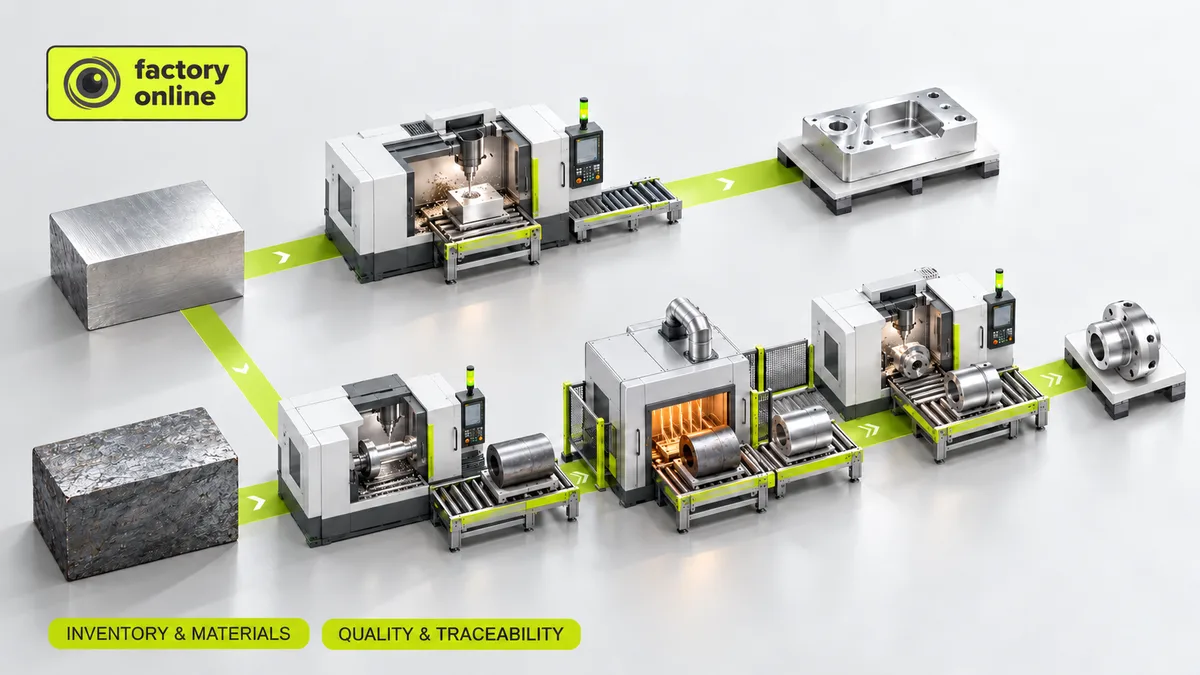
Purchasing finds a component that costs €0.40 less. On an order for 1,000 units, the saving looks like €400.
The replacement needs an extra finishing operation. Production discovers that after the purchase order has been confirmed.
A material substitution changes more than a line in the BOM. Its technical suitability, process requirements and availability must be checked together before it enters the production plan.
“Equivalent” depends on the application
A matching dimension or supplier description does not prove equivalence. Depending on the product, the decision may depend on grade, tolerance, operating conditions, certification and customer approval.
The manufacturing team also needs to know whether the substitute changes tooling, processing parameters, inspection or expected yield. Record those conditions with the approved alternative.
For a safety-critical or regulated product, follow the applicable approval process. An attractive price cannot override it.
A €400 saving with €750 of additional work
Consider a hypothetical approved substitution. Purchase savings are €400 for 1,000 units. The replacement adds 1.5 minutes of finishing per unit.
Additional work is 1,000 × 1.5 = 1,500 minutes, or 25 hours. At an assumed incremental cost of €30 per hour, that work costs €750.
The direct comparison becomes €400 − €750 = −€350. The material is cheaper, but the order costs more before any additional inspection or freight.
The €30 rate is a teaching assumption. Use a cost relevant to the decision: paid overtime or outside processing is different from allocating fixed overhead. If the finishing resource is a bottleneck, its additional load also affects other orders.
Check quantity and timing separately
An alternative can solve a shortage and still miss the shipment. Ask when it arrives, when it is released for use and how long the changed route takes.
Recalculate material quantities if the substitute changes consumption or yield. Preserve units of measure; a price per kilogram is not directly comparable with a price per metre.
The existing guide to incoming material quality explains why received stock may still be unavailable for production.
A short approval record prevents a long argument
Capture the original and substitute item, applicable products, permitted quantity, validity period and approval owner. Include revised routing time and inspection requirements where needed.
Specify what happens after the shortage ends. A temporary substitution should not become the default accidentally because somebody copied the last order.
After production, compare actual consumption, processing time and accepted output with the assumptions. That evidence supports the next decision.
Test the complete decision in factory.online
Bring a material-shortage example to a factory.online demo. Ask how product data, material demand and resource load reflect the proposed replacement, and confirm which approval steps need your existing technical process.
Book a demo with the original specification and the substitute's requirements. The useful result is a feasible order with an understood cost, not a cheaper purchase line.
